life is short. do first thing first.

Category: Travel Page 39 of 44

Mosque in Guangzhou, CHINA (Abi Waqas Mosque)

June 2010:

Sejarah kedatangan Islam di China bermula pada zaman Khalifah Uthman Al Affan (RA) di mana bapa saudara Nabi (SAW), Saad abi Waqas telah diutuskan ke China melalui jalan sutera laut kepada Maharaja Dinasti Tang. Utusan ini pertama mendarat di Canton, ketika itu pelabuhan perdagangan utama di China, selepas itu menuju ke ibukota dinasti Tang di Xian dan diterima baik dan Maharaja memerintahkan sebuah masjid dibina di Canton (sekarang Guangzhou) buat mengingati peristiwa bersejarah ini. Inilah Masjid Huai-sheng, masjid yang pertama dan tertua di China. Saad abi Waqas kemudian kembali ke Guangzhou dan meninggal di sana. Sebuah monumen dibina dan dikenali sebagai maqam Saad Abi Waqas di kota Guangzhou. Saya berkesempatan melawat masjid ini baru-baru ini.

Alamat / Address:

Assahabi Abi Waqas Mosque (Muslim Sage’s Tomb)
No.901, North Jiefang Road
Tel: 020-86692743

Bagaimana untuk sampai ke sini? / How to get here?

Access to this mosque is quite tricky as the entrance is located at the edge of crowded intersections.  The mosque is located inside the small park (there was a construction work at the entrance to the park during my visit). For adventurous, you can take Guangzhou metro and stop at Yuexiu station.  In the metro underpass, exit toward Li Hua Hu park (opposite side of Yuexiu Park).  NOTE: There are many parks around this area. When you come to street level, turn right and walk ahead along North Jiefing Road (not toward China Hotel). You will see a small park at your left, and of course the famous Yuexiu Park to your right across the street. Keep on walking and the road will curve to the left.  The entrance to this mosque is to your left at the curve.  If you walk more than 15 minutes from the Yuexiu metro station and still cannot find the mosque, you are lost already.   For conventional people, you can take taxi to this place, but make sure the address of the mosque is written in Chinese. Ask your hotel’s concierge to do this. Some taxi drivers will just dump you in front of the entrance to Yuexiu Park and tell you that the mosque is just across the road, pointing to the direction of the small park. (Thats what happened to me. In this case you must cross the road via metro underpass.)

Facade of Saad Abi Waqas mosque from North Jiefang Rd in Guangzhou CHINA

A well which never dries at the Abi Waqas Mosque in Guangzhou, CHINA

Entrance from the small park in the front of Abi Waqas mosque in Guangzhou, CHINA

Ancient tombs of sahabat (sages) in the Abi Waqas mosgue in Guangzhou, CHINA

Maqam Saad Abi Waqas di Guangzhou, CHINA

A small building housing the tomb of Abu Waqas in Guangzhou, CHINA

Tomb of Saad Abi Waqas (may Allah be pleased with him) in Guangzhou, CHINA

Mosques in Guangzhou, CHINA (Huai-sheng Mosque)

June 2010:

Sejarah kedatangan Islam di China bermula pada zaman Khalifah Uthman Al Affan (RA) di mana bapa saudara Nabi (SAW), Saad abi Waqas telah diutuskan ke China melalui jalan sutera laut kepada Maharaja Dinasti Tang. Utusan ini diterima baik dan Maharaja memerintahkan sebuah masjid dibina di Canton (sekarang Guangzhou) buat mengingati peristiwa bersejarah ini. Inilah antara masjid yang pertama dan tertua di China, berusia lebih dari 1300 tahun, yang boleh dilihat sendiri pada hari ini di Guangzhou, China. Masjid in juga dikenali dengan nama Guangta Lu Temple, Lighthouse Mosque dan juga Grand Mosque of Canton. Saya berkesempatan melawat masjid ini yang dikenali sebagai Masjid Huai-sheng dan juga maqam Saad Abi Waqas di kota Guangzhou, baru-baru ini.

Masjid Huai-sheng terletak di No 56 Guangta Lu (Lu = jalan = road) di tengah-tengah bandar Guangzhou, tidak jauh dari hotel-hotel utama di kota ini. Dari Beijing Lu, dengan teksi mengambil masa 15 minit atau kurang dari itu. Bagi yang sentiasa mencari pengalaman baru, anda boleh mengambil keretapi bawah tanah (subway atau metro) dan turun di hentian Ximenkou (saya rasa Line 2 — kuning).  Dari stesen ini anda kena berjalan kaki 10 minit ke masjid. Terdapat sebuah restoran makanan halal dan juga sebuah kedai runcit halal di depan masjid.

Rekabentuk masjid ini seumpama pagoda. Tiada minaret kecuali sebuah menara rumah api (lighthouse) yang bersejarah. Dewan solat masjid ini terletak di tengah-tengah komplek masjid dikelilingi bangunan berbentuk 4 segi yang menempatkan pejabat pentadbiran, tempat wuduk, kelas Quran dan lain-lain lagi.

Alamat masjid/Address:

No 56 Guangta-Lu (Guangta Road), Yuexiu District, Guangzhou. Tel: -020-83333593.

Bagaimana untuk sampai ke sini? /How to get here?

Taxi is the best way to reach this place. Guangta Lu is a narrow alley away from main road. The main road is Zhongshan Road No.6 and Jiefang Road.  For the adventurous you can take super-efficient Guangzhou Metro at stop at Ximenkou station. From there you walk  along  Hufu street with cool  leafy trees and everyday shops and everyday people. Turn right into Guangta Lu and this mosque is at No 56 Guangta Lu. There is a halal restaurant and halal grocery store in front of the mosque. Locals / taxi drivers may not know the word mosque, but they know Muslim temple.

Facade from the main road. This masjid is located at 56, Guangta-Lu (Guangta Rd), Guangzhou, CHINA

How to reach the mosque: One way is take a metro and get off at Ximenkou station

An old lighthouse is a historical feature of this mosque

An old lighthouse is a historical feature of this mosque
Main prayers hall

Inside view of the Huai-sheng mosque in Guangzhou, CHINA

Main building inside the complex of the mosque

Main building (prayers hall) in the compound of Huai-sheng mosque in Guangzhou, CHINA

Entrance to Huai-sheng mosque in Guangzhou CHINA

Halal moslem restaurant right in front of Masjid Huai-sheng in Guangzhou, CHINA

Mosques in Yangon (Masjid-masjid di Yangon, MYANMAR)

Moslem community in Myanmar is quite sizeable that almost every town got at least one mosque to cater for Moslem community of which I reckon almost 10-20% of the entire population of Myanmar. They are rather self-sufficient community with respect to relationship to Allah (“hablumminannas“). Internally, their house of worship (masjids) are well decorated, with carpets and most with air conditioners or at least ceiling fans. Externally you may not recognize that it is a masjid as the small entrance blended well with old shophouse, but the entrance could lead to a modest prayers hall. This is true for masjids in downtown area where space is a limitation. Some masjids outside the downtown may have some exception. Masjids also serve as a community center and a place for learning Islam for young and adult alike. Quranic and fardhu ain classes are common sights in most masjids. Jemaah Tabligh is the most active dakwah group here. There are many Islamic organizations in Myanmar but most are lesser known, apart from Ulama Council (Majlis Ulama). Ulama Council is the body which issues and perhaps monitors halal certification for foodstuff manufacturers in Myanmar.

Myanmar is a deep Buddhist country, so other religions take backseat.  You could see mosques in every towns and cities but most are in dire state. So are churches. Operating expenses for mosques come mainly from public donation and wealthy moslem businessmen. Despite assurance of freedom of worship, discrimination by religion prevails.

Here are some collection of mosques in Yangon, MYANMAR that I have been during my short assignment in Yangon. I will update this post from time to time insyallah. Mosque (or masjid in Arabic or Malay) is called pelly in Myanmar.  If you say “Petchampek pelly thuwa may” to a local taxi driver, it means “let’s go to Petchampek Mosque”. Moslems are called as kalla by non-moslems in Myanmar, the word itself carries a derogatory meaning, so I was informed.

Masjid Sunni Bengali, Yangon Downtown.

1. Masjid Sunni Bengali — probably the most popular among tourists and business travellers  as it is located in the heart of the city, along Sule Pagoda Road. It is 5-min walk from Traders Hotel and about 10-15 min walk from Bogyoke Market (Scott Market). Friday prayers time is the busiest. Prayers hall is air-conditioned. Sule Pagoda is just right in front of it. Halal restaurants are aplenty around the mosque. Just ask locals. UN Representative Mr Ibrahim Gambari offered prayers here when he was in Yangon in 2008 negotiating the release of Daw Aung San Su Kyi with the Myanmar military government.

Masjid Kambek, Yankin Township, Yangon

2. Masjid Kam Bek, Yankin Township, Yangon — located off main road in Yankin township in a quiet neighborhood among big houses with high fencing. Down the same road, there is a Catholic church. This mosque is about 20 min drive from downtown. Take Kabaye Pagoda Road toward the airport and turn right after Sedona Hotel.

Masjid Chulia Dargah, Yangon

Inside Masjid Chulia Dargah, Yangon

3. Masjid Chulia Dargah, Yangon — located right in front of Bogyoke Market (Scott Market), along Aung San Road. For heavy shoppers if you run out of time, just stop by here (males only). Hotel Central, Hotel Traders and Malaysian Airlines Office is are all next to this mosque. Dargah means a tomb for a pious man where people come to pay respect. Don’t know who he was. May God bless his soul. Nice decoration inside — main prayers hall is air-conditioned.

Masjid Sunni Poja, Yangon

Inside view of Masjid Sunni Moja in Yangon

4. Masjid Sunni Moja, Yangon — located in the Yangon downtown area, near Anawhartha Road.  Founded by a group of moslems from northern India who came to Myanmar either as traders or soldiers during British occupation in 1930s.  All Sunnis in Yangon are mainly Hanafi sect followers. They all observed more or less the same prayers time (azan and solat time).

Masjid Soorthy, Yangon

5. Masjid Soorthy, Yangon Downtown — located in the Yangon downtown area, near Chinatown. Another nicely-decorated masjid, fully air-conditioned, constructed by Gujerati people from India.

6. Masjid Petchampek, Yangon — this masjid is located along Upper Pansodan Road, near Aung San Stadium and the main railway station. A big moslem community in the township of Mingalar Taung Nyunt is next to it. Dr Mahathir Mohamed, ex- Malaysian Prime Minister was said to have offered solat Jumaat here during his visit to Myanmar some times ago.  The masjid was itself a historical site in a way. It was a target site for militant bombing in late 1990, and as result half of the building was destroyed, but never repaired since then. That’s how the name was derived —petchem means half and pek means pieces.

Inarguably, the mosque is the most international as it is the markaz (center) for the Tabligh Jemaat movement in Yangon.  This is a peaceful missionary movement who travels around the world from one place to another to spread the message of Islam to the entire humanity, with priority to moslem brothers, reminding them to return to the greatness of life hereafter. This movement makes mosques as center for their activities.  So there are bustling activities inside and outside the mosque every day. There is a halal moslem restaurant nearby.

Main entrance of Masjid Jamek Cholia, Yangon

Multipurpose hall next to the main entrance to Masjid Jamek Cholia

Prayers hall in the Masjid Jamek Cholia, Yangon

7. Masjid Jamek Cholia, Yangon — located  on narrow Bo Sun Pat Street in the downtown area. Very close Masjid Sunni Bengali (see above). The masjid has a mutipurpose hall for rent to muslims to conduct their activities including wedding, meeting and training. Many stalls selling halal food and drink at the entrance — very lively everyday after solat Asar as jemaah enjoy evening air with a sip of lempe-ye (tea with milk) waiting for Maghrib prayers.

Minaret of a masjid near Tamwe.

Inside Masjid Jamek Tamwe in Yangon

Jameah Arabia Darul Ulum next to Masjid Jamek Tamwe in Yangon

8. Masjid Jamek Tamwe, Yangon — located in Tamwe Township, about 15 min drive from downtown area. Tamwe is home to many moslems in Yangon. They are 3 masjids — may be more — in the Tamwe township. Masjid Jamek Tamwe is located near the famous Tamwe junction. The masjid is considered big if you add a madrasah tahfeez, Quranic classes and the old moslem cemetery behind the masjid.  A renowned moslem scholar from Makkah was said to have been died and buried here.

Inside Masjid Jamek Bengali, Yangon

Minaret of masjid Jamek Bengali, Yangon

9. Masjid Jamek Bengali, Yangon — No doubt that this is one of the big masjids with a distinctive mosque design, looking from outside. It is located along the road leading all the way to the downtown area. The masjid is surrounded by moslems living in the apartments. Only 10 min drive from the downtown.

Mogul Hall is Syiah masjid in the Yangon downtown area.

Mogul Hall is Syiah masjid

10. Masjid Syiah, Yangon — located at the busy road in the downtown area.  Never been there, so do not know how they pray. It is actually a Syiah — a sect of Islam considered deviationist by maintream Islam — community center.

Myanmar Islamic Council HQ in Yangon

11. Islamic Council HQ, Yangon — located along Bo Sun Pat Street in downtown Yangon. I don’t have any info on this Islamic body — its organization structure, their objectives and the members. Just came across the office and snapped the photo.

12. Masjid Ranauk, Yangon — located in the moslem area of Myagone in the township of Mingalar Taung Nyunt.  Green marble slabs make up the facade of the mosque. Some portion of the mosque was under construction during one Asar prayer in June 2010, when I was there. Main prayer hall is fully air-conditioned.

13.  Masjid at 8th Mile (Pyay Road), Yangon — located conveniently on Pyay Road (old name= Prome Road) at Kabaye Pagoda Road, one of the busiest intersection in Yangon, between Yangon Airport and downtown. This is a small masjid hidden behind the row of old shop houses.  A famous shopping center known as Junction 8 is just across the road. This is a site for bomb blast by separatist group (as claimed by the Government) a couple years back.  Yangon Hotel is only one -min walk.  Downtown  area is about 30-minute drive away from here.

14. Masjid Kokhine, Kabaye Pagoda Road, Yangon — the smallest among all mentioned above. But I must mention this mosque as I frequented this mosque the most during my time in Yangon for a very simple reason — nearest to my office and my apartment. Located along busy Kabaye Pagoda Road, this mosque could easily missed if you are in a speedy car. We also called it Toyota mosque, as a Toyota service center is just next to it.  The trustee is Brother Ahmad, whose late grandfather Mohammed Jewa owned and waqaf (donated) this land for mosque construction. He and his 10 relatives stayed behind the mosque.  Fully air-conditioned but only turned on during Friday prayers or hot summer days, to save electricity.

<<TO BE CONTINUED>>
Chaung Tha Beach, MYANMAR

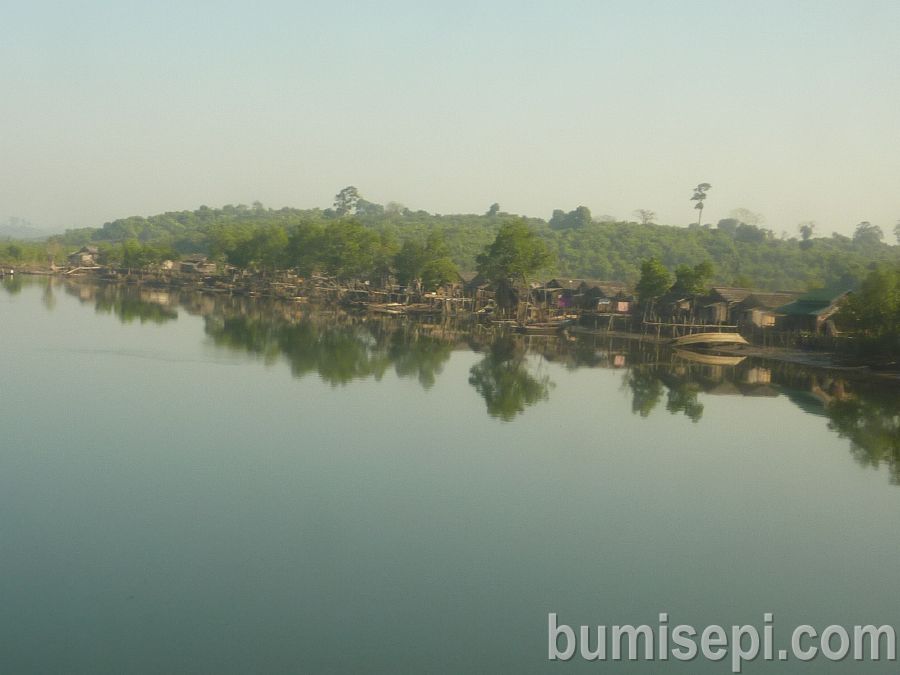
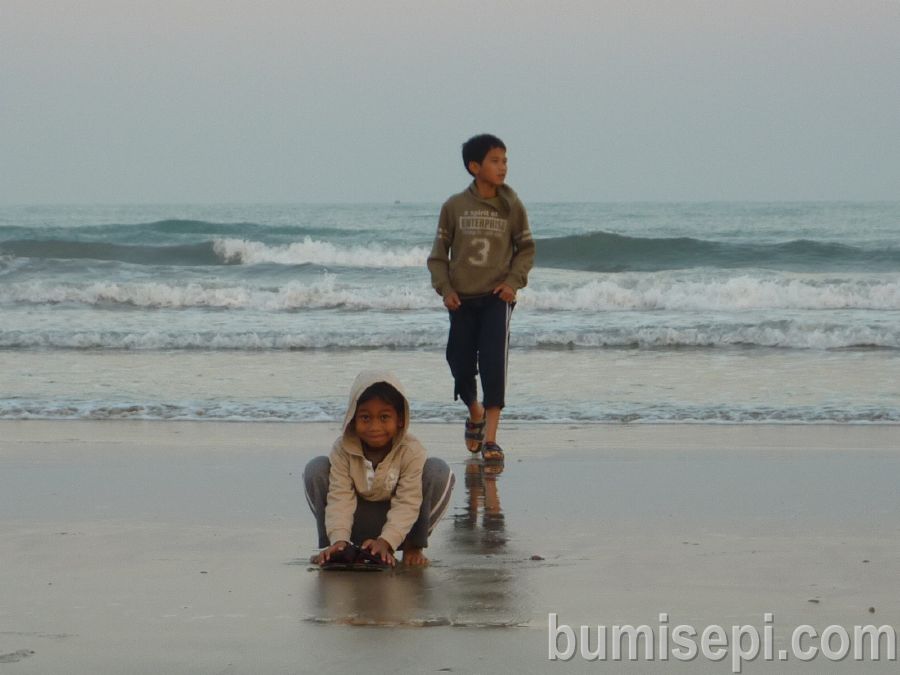
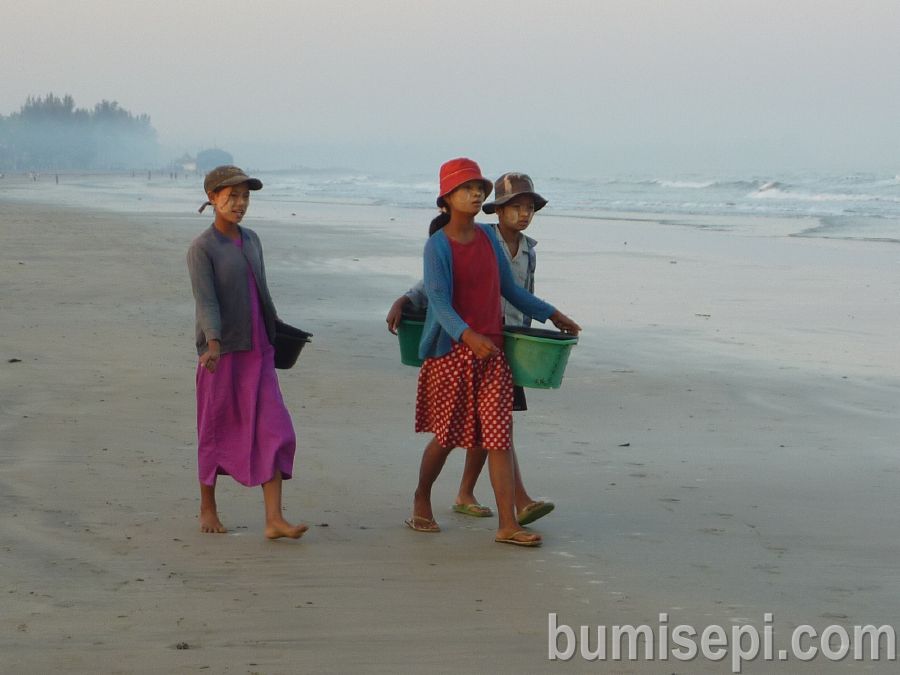
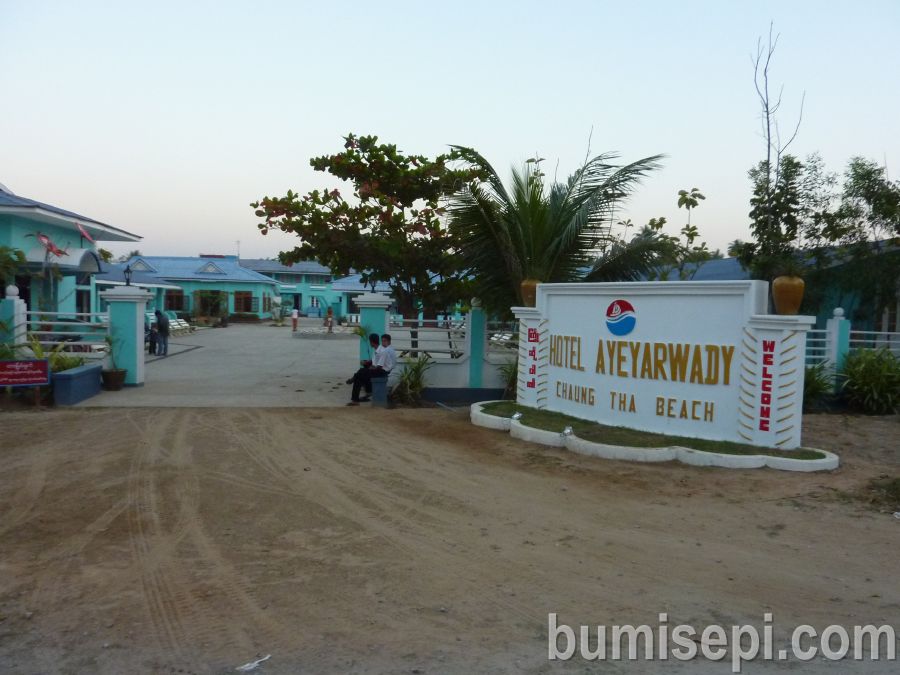
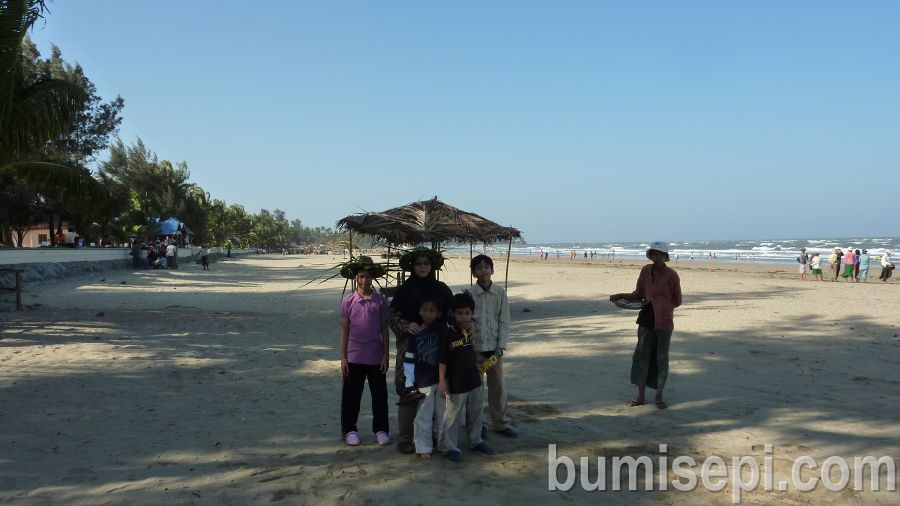
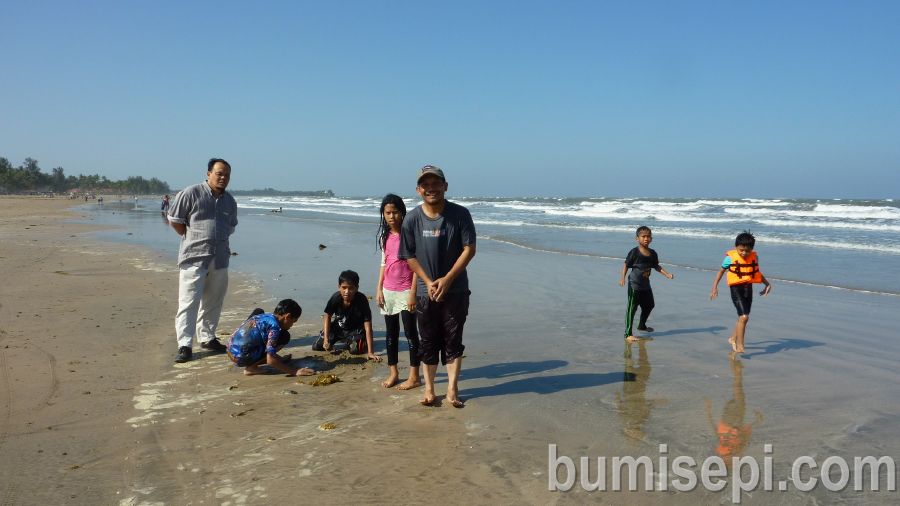
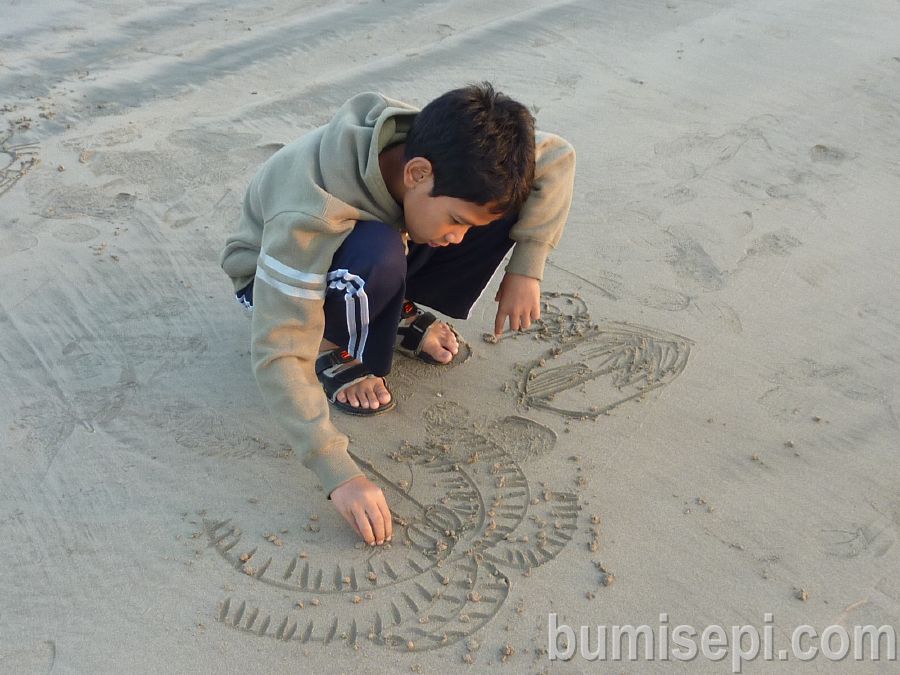
Chaung Tha Beach terletak 40 km ke barat Pathein (Bassein) di Ayeyarwaddy Division.  Perajalanan dari Yangon ke sini mengambil masa lebih kurang 5 ke 6 jam.  Chaung Tha Beach merupakan destinasi pelancongan tepi laut tersohor di Myanmar selain dari Ngapali Beach. Pantainya panjang dengan pasir yang halus dan seakan-akan berlumpur. Pohon kelapa dan kasuarina tumbuh di sepanjang pantai. Dari kejauhan kelihatan beberapa buah pulau pesisir pantai.

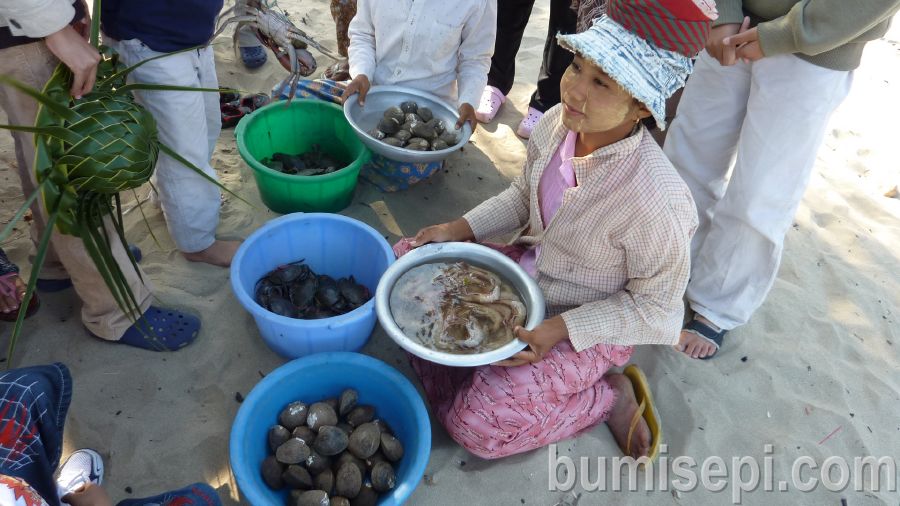
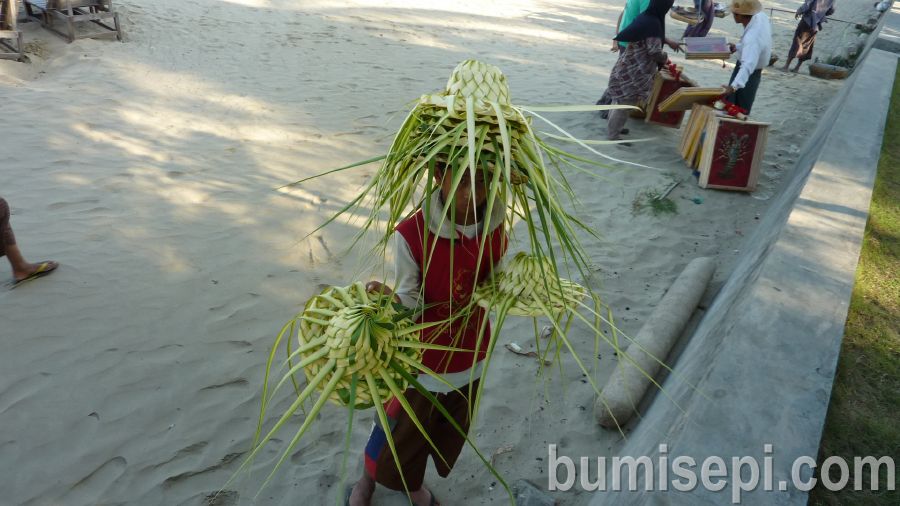
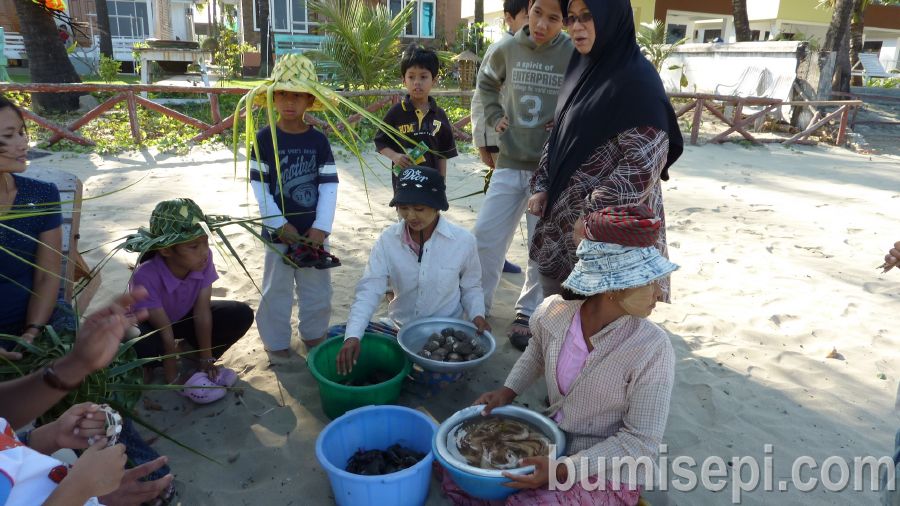
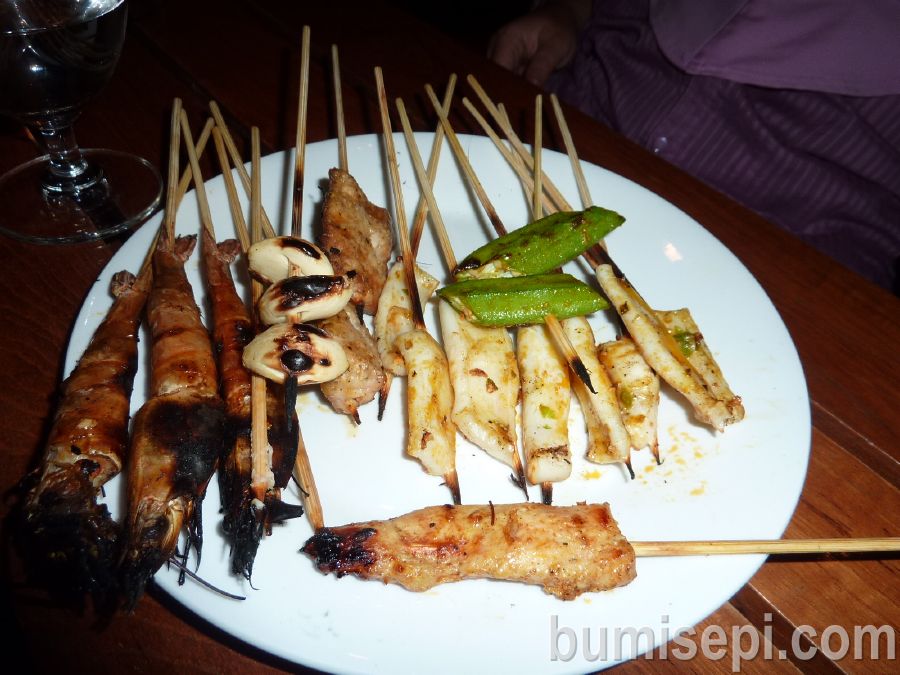
Banyak aktiviti komersial kecil-kecilan di sepanjang pantai. Penjaja membawa barang dagangan mereka di atas kepala menjual barang-barang handikraf dan makanan laut (seafood) dan akan menghampiri anda dengan barang jualan mereka. Ketam memang makanan laut popular di sini. Ketam hidup dijual dalam baldi-baldi besar yang diangkat dengan tangan dari satu tempat ke satu tempat.  Anda pilih bilangan dan saiz ketam yang disukai dan bayar harganya dan penjual akan memasak ketam tersebut mengikut selera anda. Bukan saja ketam, ada udang dan ikan-ikan laut, dan harganya memang berpatutan  – dijual mengikut bilangan dan saiz dan bukannya timbangan, dan boleh ditambah seekor dua lagi. Pendek kata, Chaung Tha ialah syurga makanan laut (seafood heaven). Anak-anak ketam dijual oleh kanak-kanak tempatan untuk dilepaskan ke laut. Harga seekor anak ketam hanyalah 200 kyats bersamaan 70 sen sahaja. Tapi jaga sepitnya.

Klik imej untuk saiz sebenar. Lalukan cursor atas imej untuk cerita di sebalik gambar.

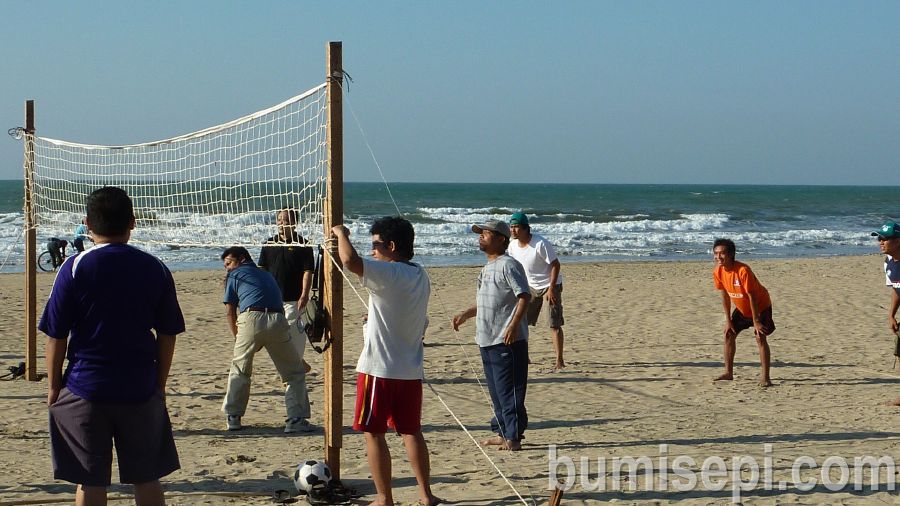
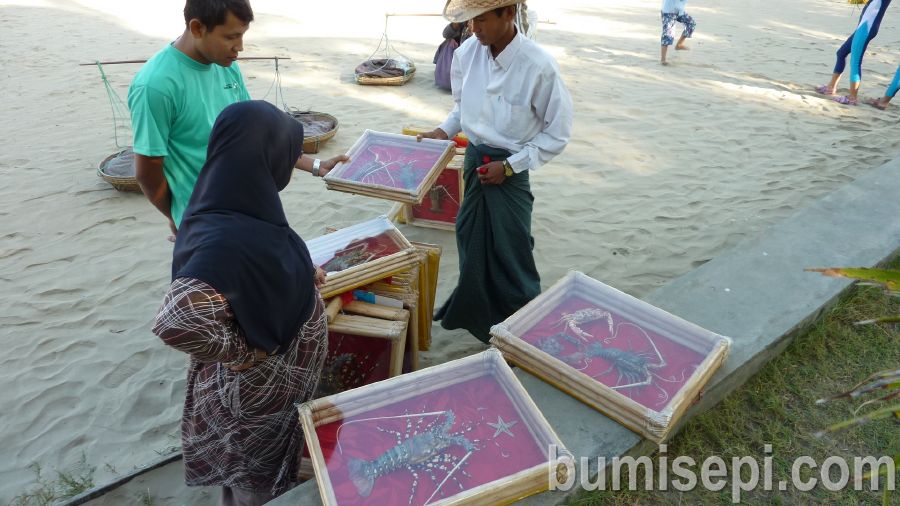
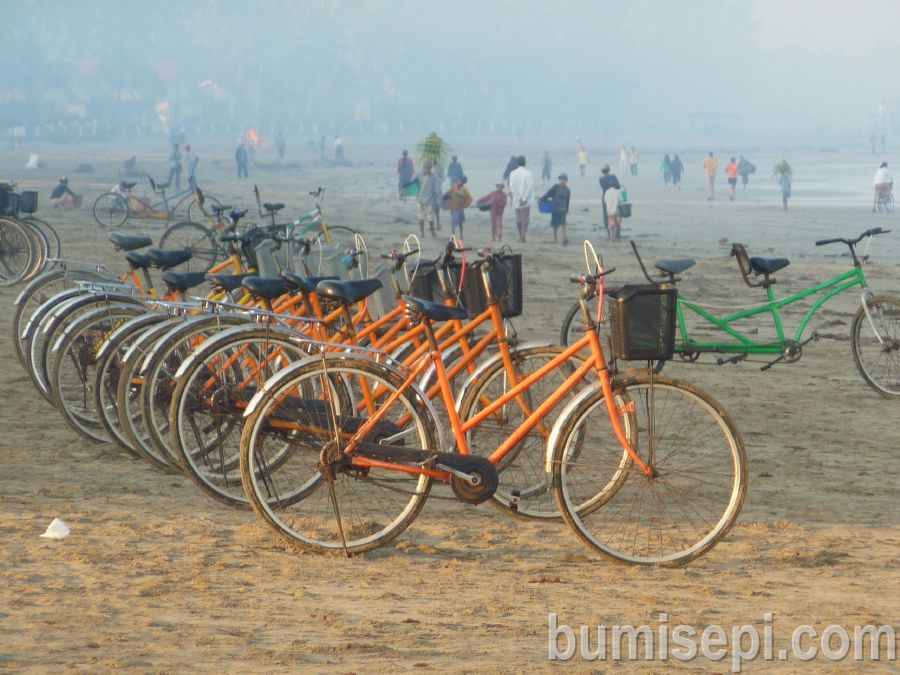
Aktiviti-aktiviti riadah banyak sekali. Anda boleh menaiki kuda di tepi pantai dengan bayaran 1000 kyats (bersamaan RM3.40) selama  15-20 minit.  Kuda-kuda di sini dijaga dengan baik, dengan ekor panjang dan kulit kemerah-merahan seperti kuda lumba.  Anda boleh menyewa basikal. Anda boleh menyewa pelampung getah yang besar dan membawanya jauh ke tengah laut dan membiarkan ombak Lautan Andaman menolaknya balik ke tepi pantai. Anda boleh bermain beach volleyball dan beach soccer. Anda boleh membeli handikraf seperti topi daun kelapa dan kulit ketam atau udang yang besar dalam frem untuk dibawa pulang sebagai kenangan.

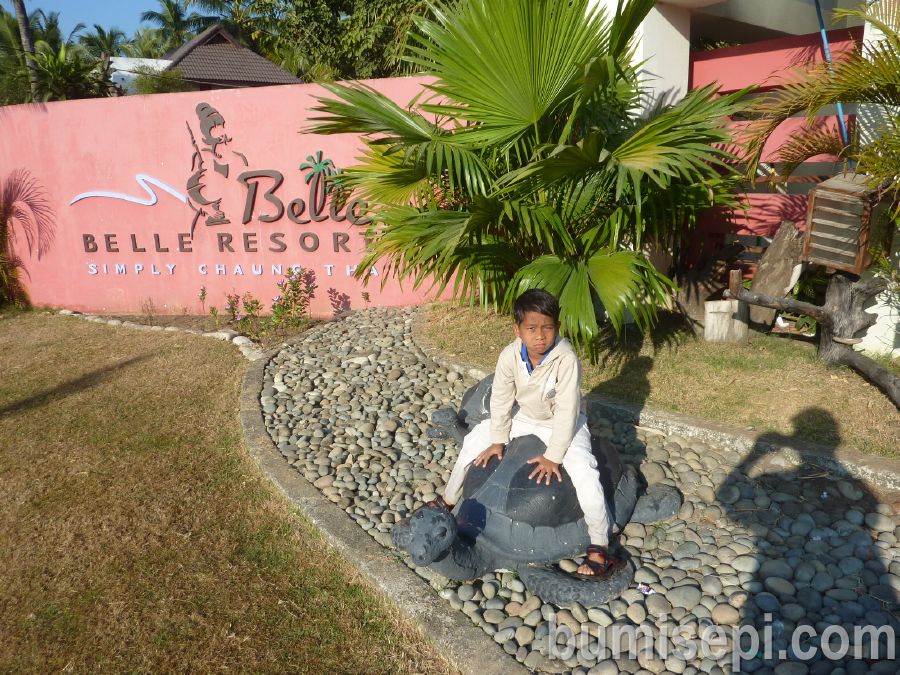
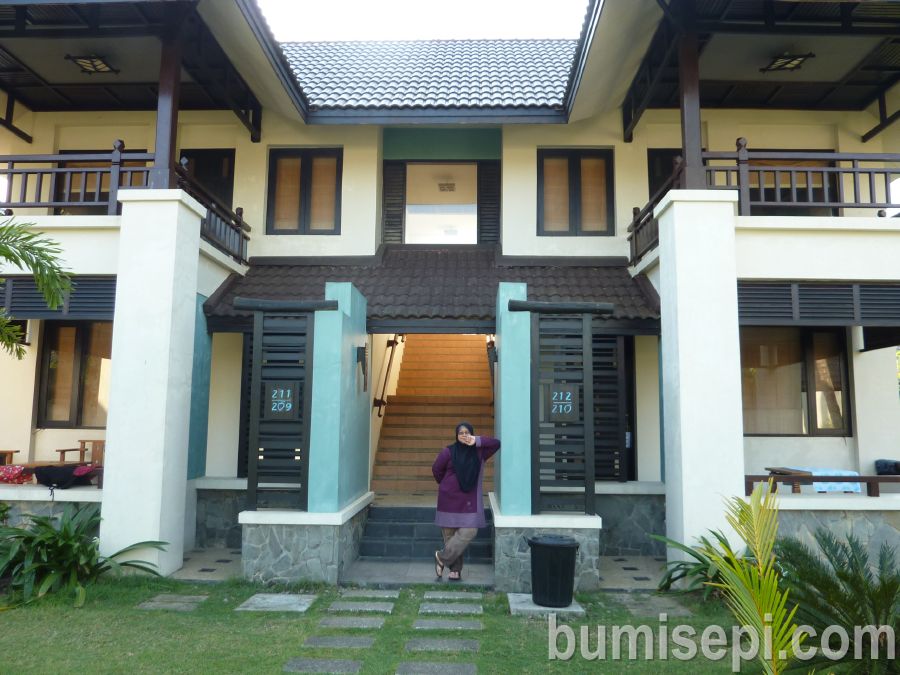
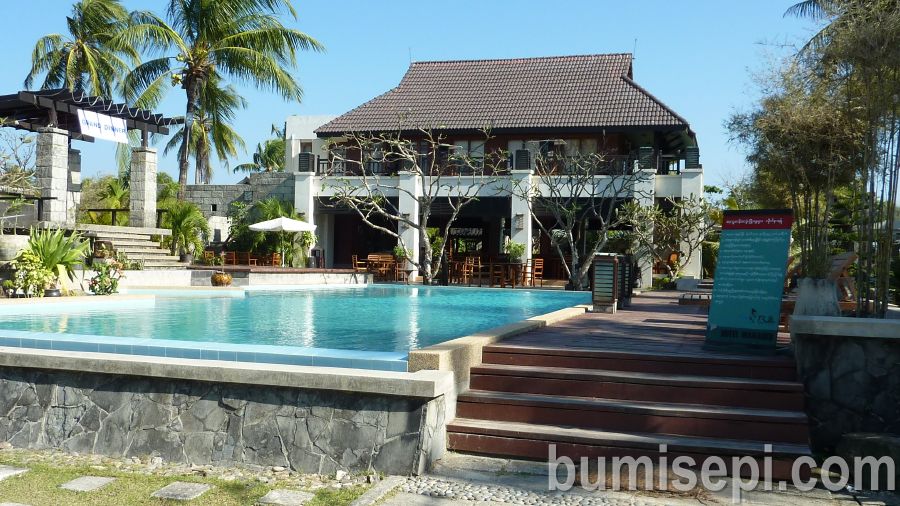
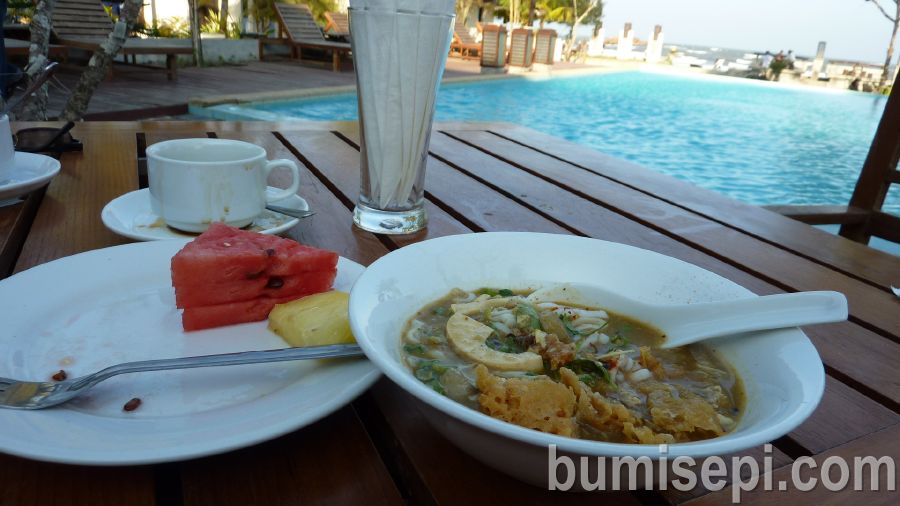
Terdapat banyak hotel berbagai bintang disini. Lawati tapak web ini  http://www.hotelsinmyanmar.com/myanmar-chaungthar-deluxe.htm.  Saya tinggal di Belle Resort sepanjang lawatan ini. Hotel lima bintang dengan kolam renang ini memang mahal (USD80++ untuk bilik deluxe menghadap laut). Saya di sini atas urusan rasmi jadi segala perbelanjaan dibayar Syarikat.

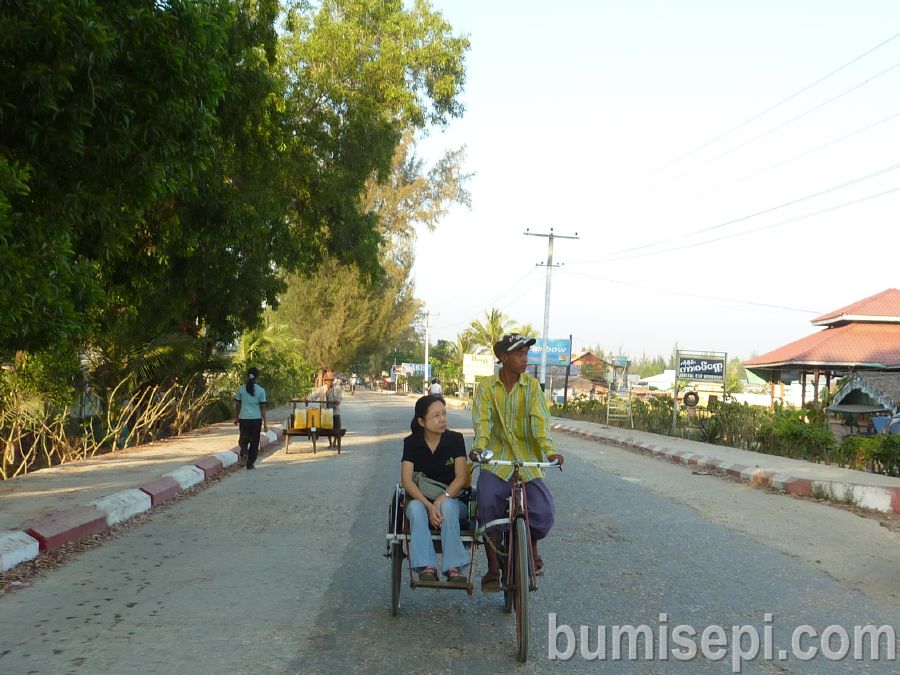
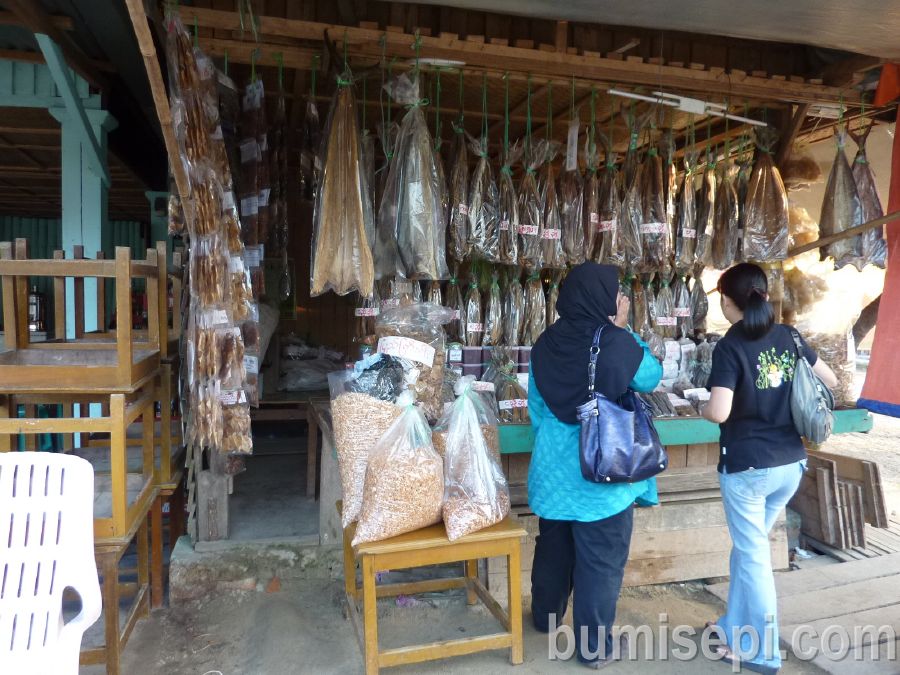
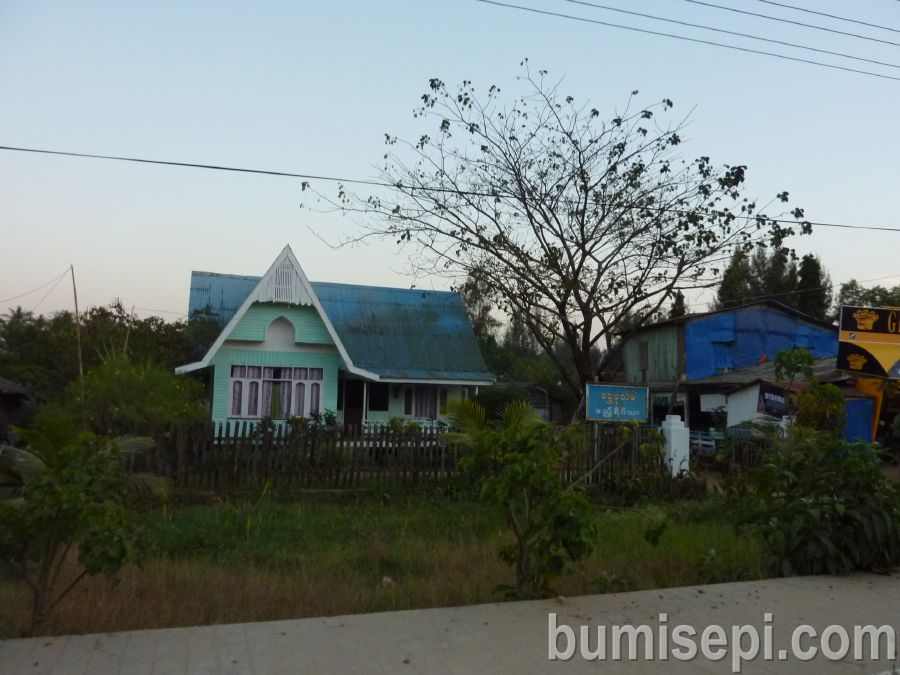
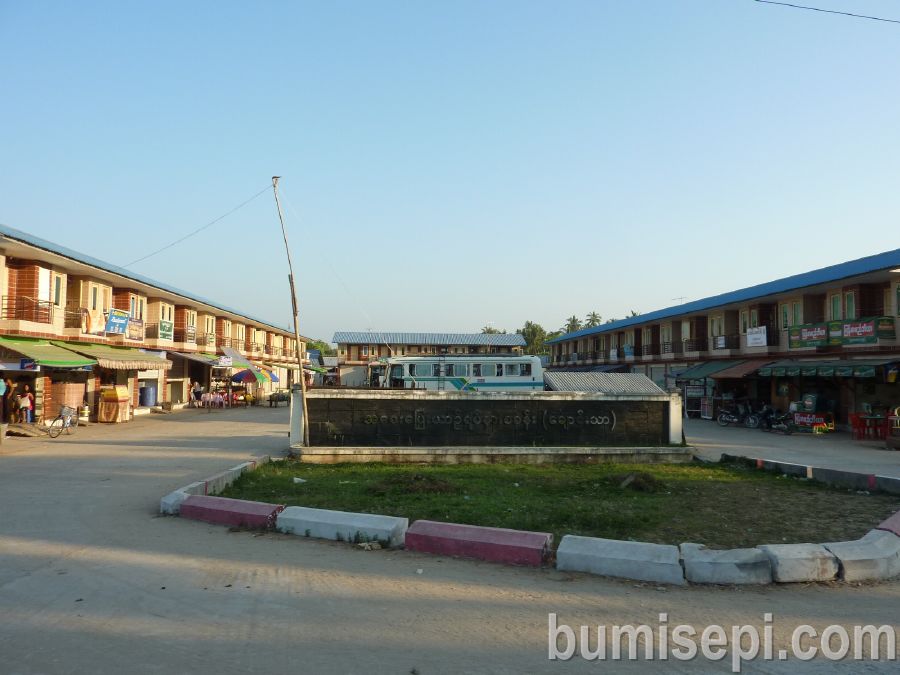
Chaung Tha ialah sebuah kampung nelayan di tepi pantai yang suram yang mana pelancongan menjadi industri utama di sini. Ini dapat dilihat dengan banyaknya hotel dan resort yang sedang atau sudah dibina atau diubahsuai.  Anda boleh melawat kawasan ‘pusat bandar’  atau lebih tepat kawasan pasar Chaung Tha hanya berjalan kaki dari resort anda atau menaiki beca 2-seater, satu seat menghadap ke depan dan satu seat lagi menghadap ke belakang.  Di kawasan pasar, ikan masin, sotong kering yang segar boleh dbeli, selain T-shirt sebagai kenangan ke sini. Tidak kelihatan masjid di kawasan ini.

UNTUK SAMPAI KE SINI

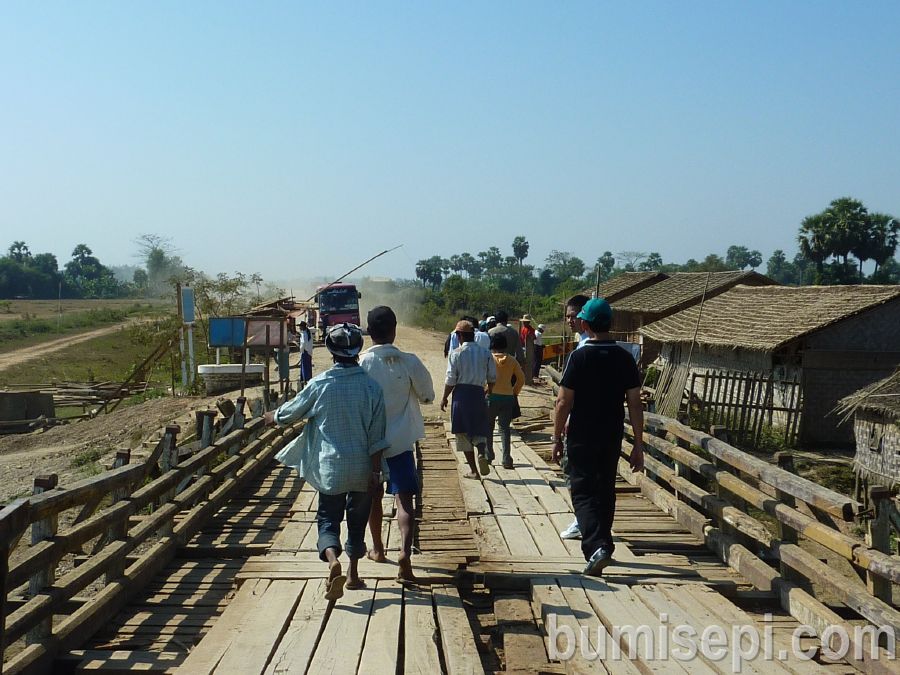
Malaysia Airline terbang setiap hari (kecuali Selasa dan Khamis) dari Kuala Lumpur ke Yangon, Myanmar. Dari Yangon ke Chaung Tha Beach anda boleh menaiki bas ekspres dan masa perjalanan 6 jam melalui jalan raya biasa (di Myanmar tiada lebuhraya seperti PLUS di Malaysia) yang mana hanya satu pertiga yang bertar sempurna.  Untuk tempahan hotel, anda boleh melawat laman web http://www.hotelsinmyanmar.com/myanmar-chaungthar-deluxe.htm.

Anda memerlukan visa untuk memasuki Myanmar.

A funeral in Yangon, MYANMAR

February 2010:

My office staff’s grandmother passed away and I was invited to the funeral.  Employee relation and welfare is part of my job scope, so I chose to attend.

This is my second time attending funeral since I was posted to this country called Union of Myanmar.  The deceased was an old lady.  So the ritual is a Buddhist one and it is pretty simple. I have never attended any Buddhist funeral anywhere before, even in Malaysia, so I did not know how Malaysian Buddhists manage their dead but I guess it is the same.  I thought only Hindus burned their dead and keep their ashes, but Buddhists in Yangon also doing the same thing. They cremate  the body instead of burying them.

The funeral was conducted at a cemetery located at Yuwei, about 45 minutes drive to the north of Yangon. It is a huge area to cater for all people of Myanmar from different religions.  The process of managing the dead are typically belief-based, so the burial area is divided but religions, but all is at this single location. There is Moslem cemetery. There is a Christian cemetery. There is a Hindu one and of course Buddhist one (for info, 80% of Burmese are Buddhists). All next to each other, divided by fences.

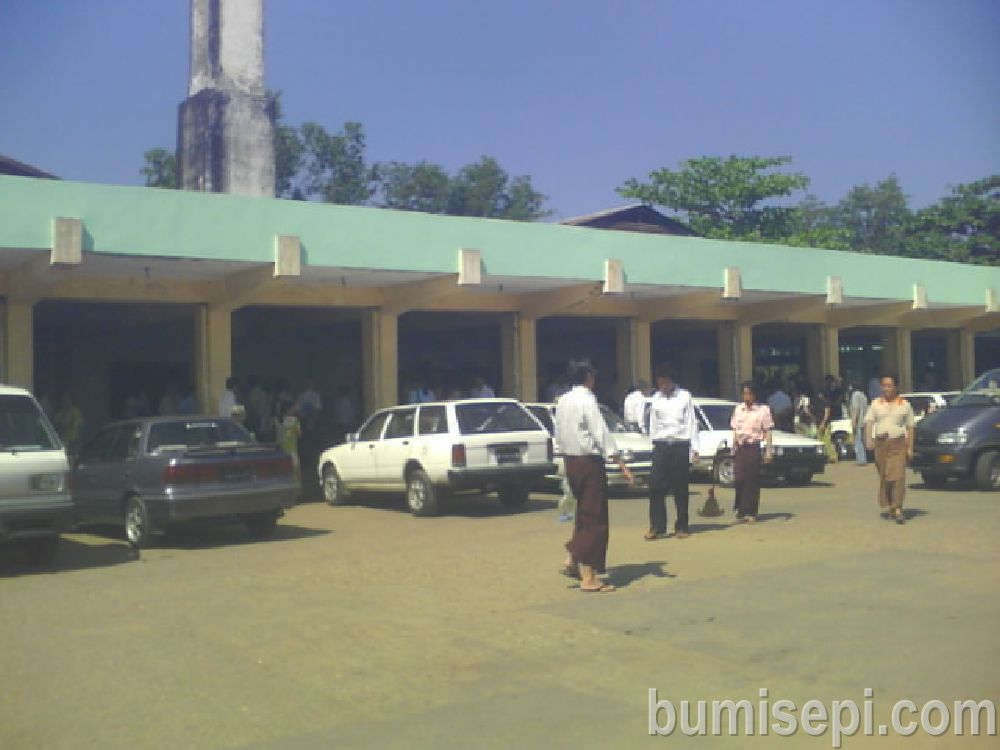
My driver dropped me at the lobby of the Buddhist funeral house. At the entrance of the prayers hall, a man in loungyi handed me a see-through plastic bag containing a 300ml bottled drinking water, a decorated fan and a small prayer book.  I could make full use of the the first two items as it was very hot afternoon in Yangon at this point in time, but not the small book. I learnt later that the small book is a collection of prayers written in Myanmar by the respectable monk in the country.

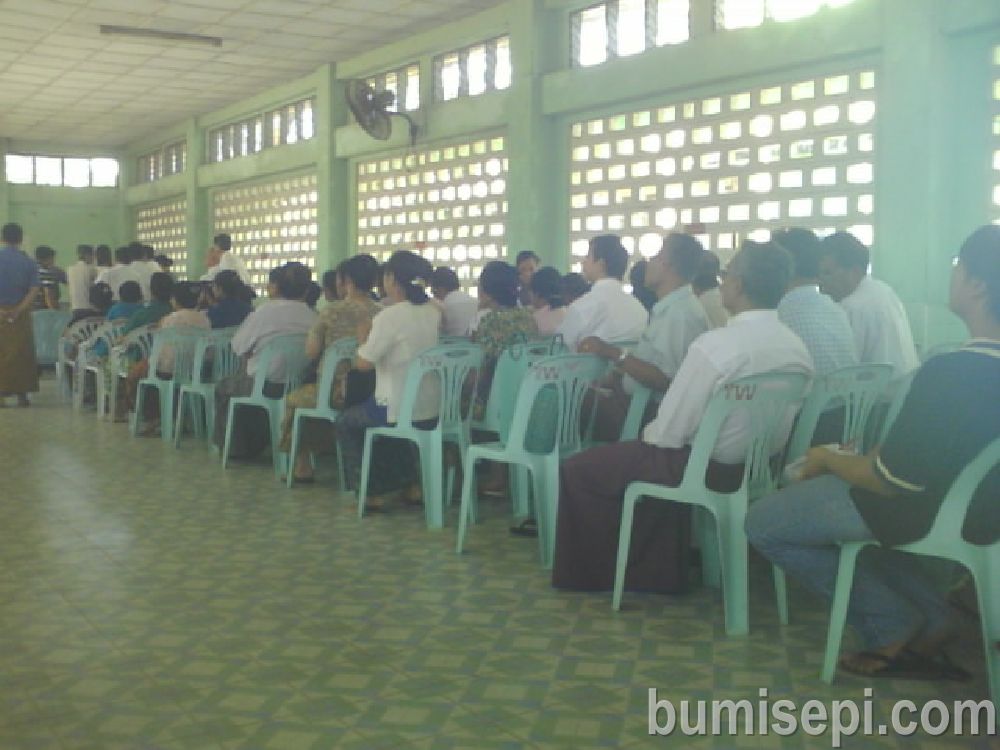
The hall is semi-open and is filled with plastic chairs. Seats were almost full and everybody was facing forward toward an open-top coffin. I saw everybody entering the hall will go to the front to pay respect to the body in the coffin, and returned to the back of the hall to find a vacant seat. I did the same. I glanced inside the steel-framed casket. The body was dressed in white gown. I could see clearly the pale face of the old woman. Flower bouquets filled up the long stand at the back and the biggest of them filled up the main table in front of the coffin. The name and the title of the donor was written a big card hanging down at each bouquet. I didn’t see any donation box so I guess cash donation is not welcomed here.  Front rows were seated by the relatives of the deceased and wise men. Soon I was introduced to eldest son of the deceased. In early 50’s he seemed cool trying to control the tears. I offered personal and official condolences to him. Nobody cried and wailed loudly and uncontrollably like Chinese in Malaysia.  No black uniform either. Everything and everybody seemed to be in the acceptance mode that life must go on.

After some times, two men carrying a gong over a wooden bar on their shoulders at both end entered the hall. The one at the back hit the gong repeatedly to signal some thing will start. They went up to the coffin accompanied by many who transfered the body from the coffin to the stretcher with roller. They slowly pushed the body out of the hall followed by the guests who followed from behind. When the body was past the entrance, a man threw the ceramic pot on the floor and it was broken to pieces, to mark the end of life of the deceased.  At the entrance of the crematorium — a building next to the prayer hall — the body made a stop to allow the relatives to bid final farewell and to take a final glance at the deceased.  Then two black men from inside the crematorium came out and push  the body inside. They shut a big door and what happened inside the gas-fired crematorium was unknown to the curious onlookers. The funeral process ended there.

I left soon after that wondering when is my time.I learnt later that a memorial service for the deceased will be conducted by the family a week after funeral. Within this period of one week, the spirit is believed to be floating around the house, and therefore must be taken care like a living person. The family member will put  a big photo of the deceased at one corner of the house, ‘feed’ him during breakfast, lunch and dinner and talk to and pray for him. All the windows must be open 24 hours to make sure the spirit ‘leaves’ the house happily and willingly within that period.

The strange practise you may say, but being posted overseas, I grow to appreciate these cultural differences. World is an awesome place, right? To borrow Discovery Channel tagline.

HOW TO REACH THIS PLACE?

Malaysia Airline flies daily from Kuala Lumpur to Yangon, MYANMAR, except Tuesday and Thursday. It is about 3 hour flight time.  Malaysians need visa to enter  Myanmar which is valid for 10 weeks upon entry.

There some photos related to this experience. Forgive the quality of the photos as they were shot using a simple O2 Atom camera phone.

Page 39 of 44

Powered by WordPress & Theme by Anders Norén